
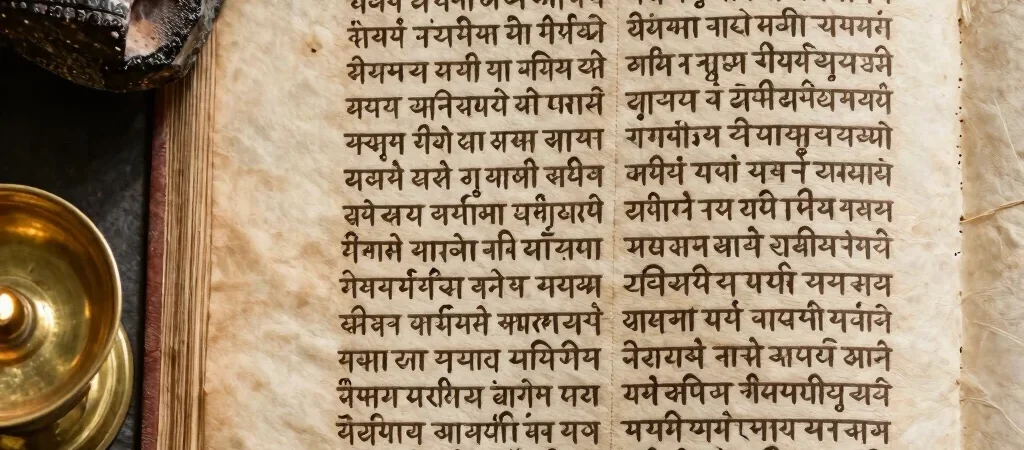
A reference to “the Vedas” can sound precise while leaving a reader unsure where to look. The four Vedas—Ṛgveda, Yajurveda, Sāmaveda and Atharvaveda—contain distinct textual traditions, and each citation needs more than a broad label. Knowing the basic layers is a practical first step towards checking a claim.
Start With The Specific Text
Vedic literature is often described through layers such as Saṃhitā, Brāhmaṇa, Āraṇyaka and Upaniṣad. This is a useful guide, but it should not be mistaken for a perfectly uniform table of contents shared in the same way by every Veda and textual tradition. When an article makes a claim, look for the named text and the more specific section or verse.
Follow The Citation
A citation such as Ṛgveda 10.90 points to a particular hymn, commonly known as the Puruṣa Sūkta; it is more useful than a general appeal to “Vedic teaching”. A reader can then check the original passage and compare a translation, rather than relying only on someone else’s summary. Where available, naming an edition or recension makes that trail clearer still.
Separate Text From Interpretation
A passage’s wording, a translator’s choices and a later interpretation are related, but they are not interchangeable. Good source-led writing identifies which one it is discussing and gives readers enough detail to verify the reference. When you meet a broad claim about what “the Vedas say”, ask first: which text, which passage and whose reading?